
Anorthosite: a new resource for ceramic bodies
In recent years, Effediesse has stepped up its investments in mining research in Brazil, fuelling interest in anorthosite, a raw material that is still largely unexplored by the Italian ceramic industry.
Effediesse has more than thirty years of experience in the production of raw materials for ceramic bodies, expanding its knowledge and expertise through an active presence in the main international production districts.
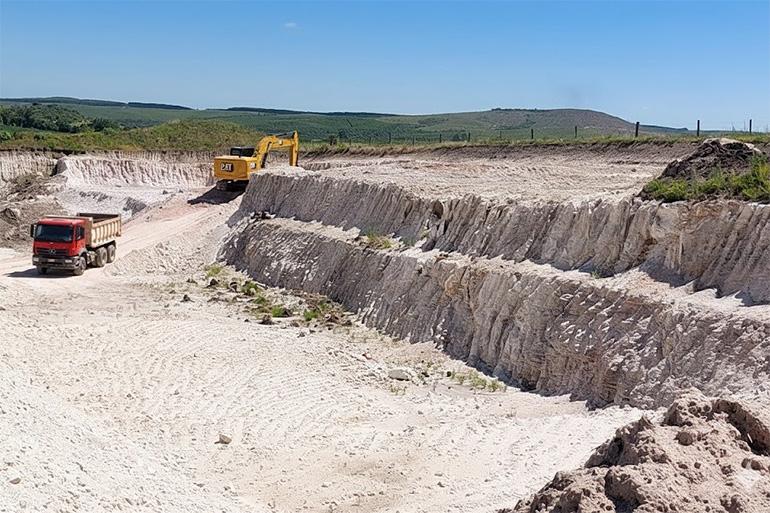
In recent years, it has stepped up its investments in mining research and product development in Brazil, a country that offers a unique combination of geodiversity, local know-how and strategic industrial partnerships. These efforts have fuelled interest in anorthosite, a raw material that is still largely unexplored by the Italian ceramic industry.
Anorthosite is a coarse-grained igneous rock with a high content of calcium-rich plagioclase and alumina, a composition that positions it between kaolin clays and traditional feldspars and opens up opportunities for new melting equilibria and the creation of more stable ceramic bodies during firing. Laboratory tests have shown that it has an interesting technical profile for the production of both glazed and unglazed porcelain stoneware.
Its mineralogical structure is dominated by anorthite (57%), accompanied by a significant proportion of kaolinite (>30%) and small percentages of quartz and muscovite.
| Identified phases | % |
| Anorthite/Albite | 57.0 |
| Kaolinite | 32.5 |
| Quartz | 10.0 |
Its chemical composition consists of 29% aluminium oxide (Al₂O₃), higher than the levels found in standard calcium-sodium feldspars, together with a very low iron (III) oxide (Fe₂O₃) content (0.40%), which is ideal for maintaining brightness in white bodies. The combined content of calcium oxide (CaO) (9.80%) and sodium oxide (Na₂O) (4.70%) performs a fluxing function, although with a more gradual yet equally stable sintering curve.
| Oxides | % |
| Al2O3 | 29.00 |
| CaO | 9.80 |
| Fe2O3 | 0.40 |
| K2O | 0.50 |
| MgO | 0.15 |
| MnO | 0.05 |
| Na2O | 4.70 |
| SiO2 | 54.10 |
| TiO2 | 0.10 |
| LOI - P.F | 1.06 |
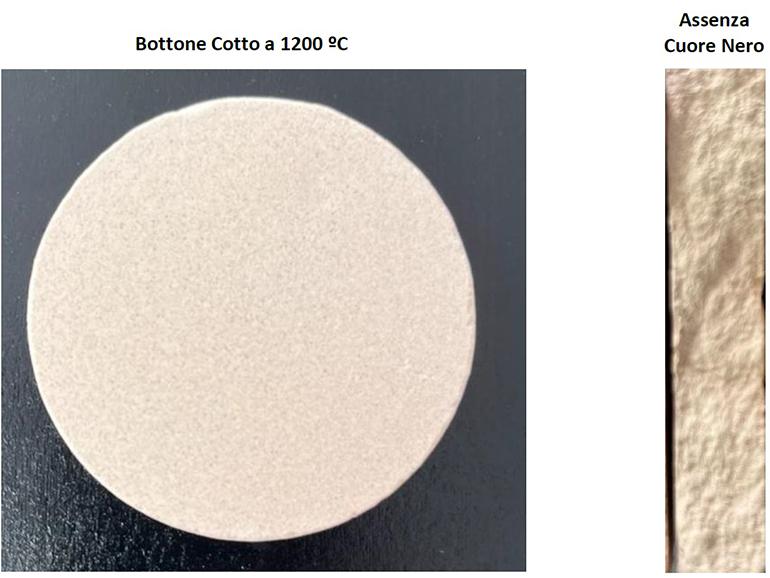
Over a 50-minute rapid firing cycle, anorthosite displays a moderate shrinkage curve (from 1.3% at 1180°C to 2.15% at 1240°C) and a steadily decreasing rate of water absorption (18% → 15.2% over the same interval). Post-firing mechanical strength reaches values of up to 196 kgf/cm², demonstrating good structural consolidation without collapse or over-fluxing.
One of the most significant characteristics is its colorimetric behaviour: the L* value remains consistently high (87.3-87.8), indicating a very light-coloured and stable sintered body over the entire temperature range. The almost complete absence of organic matter also contributes to clean, repeatable firing.
Developing this raw material is part of Effediesse’s broader strategy in Brazil, where it aims to pursue a genuine applied research programme in collaboration with local partners based on its more than thirty years of experience in the ceramic sector. This direct presence enables it to identify unconventional minerals, test them first at laboratory scale and then in industrial conditions, and supply the ceramic industry with solutions that combine innovation with production reliability.
Anorthosite offers an important opportunity to expand the range of raw materials available for the production of next-generation ceramic bodies in accordance with the sector’s needs for quality, stability and competitiveness.
Drawing on its many years of experience and its work in Brazil, Effediesse continues to explore alternative sources of raw materials with the aim of delivering value to the Italian ceramic industry.

Did you find this article useful?
Join the CWW community to receive the most important news from the global ceramic industry every two weeks











Read more