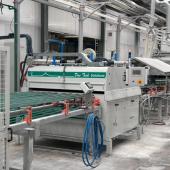


Pamesa Group makes acquisitions and strategic investments
The Spanish ceramics giant reported a fivefold increase in profits in 2024 and has entered the small-format tile segment with the acquisition of Natucer.
After overcoming the difficulties of 2023, an extremely challenging year for the ceramic sector as a whole, the Pamesa Group closed 2024 with strong growth in profitability, more than offsetting a 5% drop in consolidated turnover across its three business areas of ceramics, raw materials and energy.
The group’s turnover fell to €1,132 million, including €926 million from ceramic tiles (down 3% on 2023), €168 million from raw materials (-18%) and €39 million from the energy division (+18%). At the same time, however, the group’s margins soared. EBITDA reached €192 million (17% of turnover) compared to €106 million the previous year, while pre-tax profit climbed to €114 million (10.1% of revenues), five times higher than the €21 million reported in 2023.
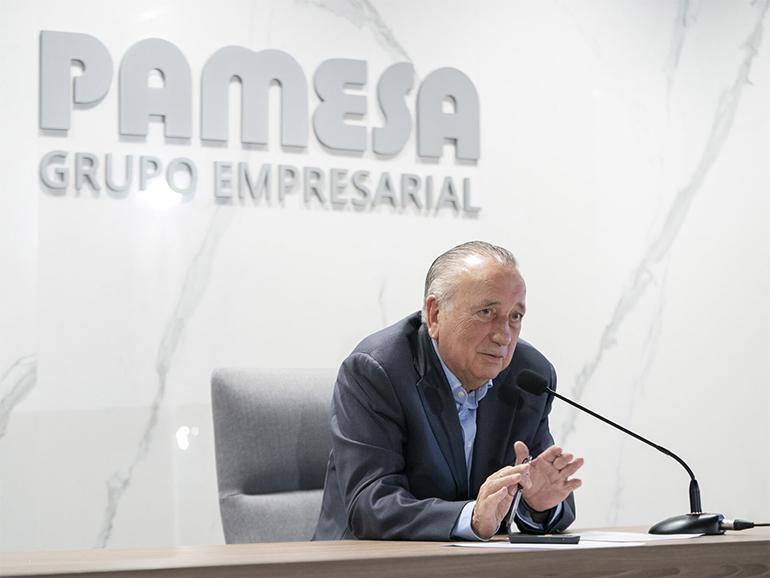
Presenting the results to the press on 29 July, Chairman Fernando Roig explained that the growth in profits partly derived from switching gas supplier from Endesa to Naturgy, which generated savings of around €85 million.
In 2024, the group sold its products to 14,200 customers in 167 countries, with exports accounting for 68% of turnover. Roig also expressed his confidence in the group’s performance for the current year, forecasting further growth.
Pamesa expanded its workforce to 3,076 employees in 2024 (279 more than in 2023, +10.4%), 99.2% of whom are on permanent contracts. This represents 20% of all ceramic sector employment in the province of Castellón. Pamesa’s focus on human capital and employee loyalty is also reflected in its remuneration policy. In 2024 it distributed more than €10.5 million in incentives to staff, while guaranteeing net salaries that are 32% higher than the national average and 14% higher than the sector average.
The acquisition of Natucer
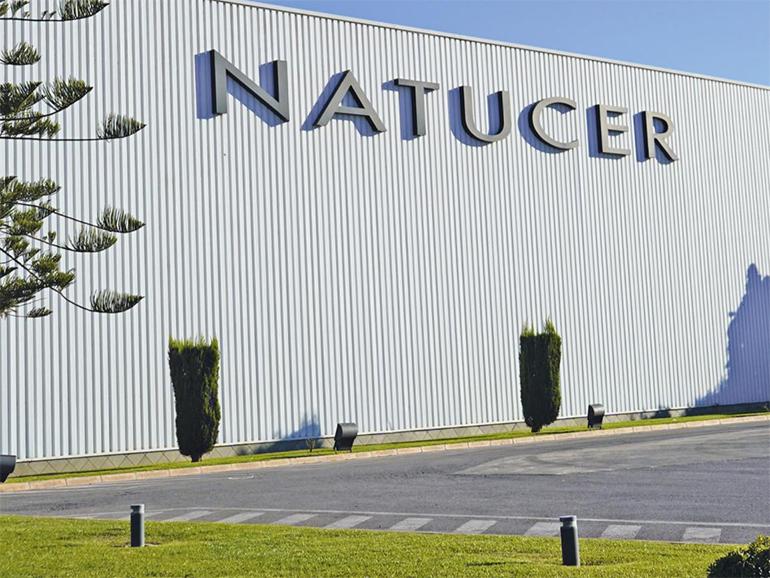
Pamesa has invested a total of €65 million since the beginning of 2025, largely on innovation and increased production capacity. The most significant operation was the acquisition of Natucer, which was officially announced by Fernando Roig at the 29 July press conference.
Founded in 1988 by Manuel Rubert, Natucer is a long-established Castellón-based company specialising in extruded ceramics and small-format tiles. This acquisition is a strategic fit for Pamesa, broadening its offering alongside its seven other brands (Pamesa, Ecoceramic, Geotiles, Navarti, Tau, Prissmacer and Ascale). Concluded within three months of initial talks at Coverings 2025, the deal covers Natucer’s two factories in Onda and Betxí with a workforce of 158 employees. The company offers a product portfolio catering to the high end of the market and has a particularly strong presence in the United States.
Despite ongoing uncertainty surrounding tariffs, Roig is anticipating further expansion in the US market.
“We have shown that we can grow even in complex scenarios,” he said.
In 2024, Natucer posted revenues of €32 million, a figure Roig expects to increase as early as this year:
“We’ll do a great job and I’m confident this will prove to be a valuable acquisition.”
A new showroom is also scheduled for completion by the end of the year.
Technological investments in 2025
The group has also made substantial investments in technology over the first seven months of 2025.
Two Supera® continuous presses have been installed at the factory in Almassora for the production of 7.8 mm thick slabs in sizes of up to 360x120 cm and sub-multiples (120x120 cm, 60x120 cm, 60x60 cm and 30x60 cm). To further expand the range, new 160x160 cm and 100x100 cm formats have also been launched.
A third kiln began operation at the Ascale facility in L’Alcora in August, increasing productivity by 50%. The company has also installed a 24-bar digital printer, the only technology of its kind in Europe and a solution already adopted by Pamesa Porcelánico.
As for new product development, the group has launched Quick Cerámica 2.0, a dry tile laying system that reduces installation times.
In addition to industrial investments, Pamesa has also invested in clay quarries and completed the expansion of the Geotiles showroom, which now has 1,100 square metres of exhibition space.
Environmental sustainability
Pamesa has renewed its commitment to sustainable production processes based on a zero-waste model and renewable energy use. The group recycles 100% of its wastewater, amounting to 1.5 million tonnes annually, and recovers 217,000 tonnes of solid waste.
Its 121,000 sqm photovoltaic array (22.6 MWp capacity) allows the company to avoid 7,900 tonnes of CO2 emissions each year. A kiln heat recovery system, which provides 20,800 MWh per year to dryers and 57,500 MWh to spray dryers, avoids a further 15,700 tonnes of emissions. Overall, this reduction in CO2 emissions is equivalent to that provided by 709,000 trees.
Cogeneration, however, remains an unresolved issue. During the press conference, Roig pointed out that both the ceramic industry and Pamesa itself are being penalised by regulatory uncertainty and the lack of support for this technology. In the case of Pamesa, 30% of its cogeneration plants (out of a total installed power of 100 MW) reached the end of their useful life in 2022 and have been idle ever since due to the absence of a regulatory framework that would enable them to be renovated. The new scheme planned for 2025 imposes conditions that are considered difficult to apply in the ceramic sector, such as 30% self-consumption.
Commitment to the local community
Regarding its social responsibility, Pamesa works with a number of centres in the Valencian Community dedicated to helping people with disabilities enter the workplace by offering training and employment opportunities in the production of “trencadís” broken tile mosaics. The group also contributed to relief efforts following the devastating floods of October 2024, providing practical support to affected employees and customers and donating materials for the repair of schools and sports facilities.


Did you find this article useful?
Join the CWW community to receive the most important news from the global ceramic industry every two weeks





Related articles


Recent articles

Ceramic World Review 167/2026

Powtech Technopharm 2026

Main topics

Read more