

Grupo Pamesa posts revenue of more than €1.14 billion as it intensifies its investment programme
The ceramics division accounted for over 80% of group revenue. €120 million has been earmarked for investment in 2026.
by Milena Bernardi
Despite a persistently challenging environment for the European ceramic industry, Grupo Pamesa concluded 2025 with positive results while continuing its extensive programme of industrial and energy efficiency investments.
The Spanish group led by Fernando Roig, Europe’s leading tile manufacturer by volume, ended the year with consolidated revenue of €1,147 million, a 1% increase over 2024. Pre-tax profit fell from €114 million to €101 million, representing an 8.6% margin on sales. Group profits were primarily impacted by higher costs associated with CO2 emission allowances (ETS), which doubled in a year from €12.7 million to €25.2 million.
Ceramics remains stable while complementary businesses grow
As of 31 December 2025, all three of the group’s business units performed in line with forecasts, albeit with varying dynamics. More than 80% of revenue was generated by the core ceramics business, which maintained stable sales of €926 million, with 67% originating from exports to 162 countries. Production reached 90 million sqm, a slight increase over 2024.
Fernando Roig expects this upward trend to be maintained in 2026, with a further increase in production volumes of around 5% and a parallel rise in sales of between 3% and 5%. In the ceramic tile sector, Grupo Pamesa operates through eight brands (Pamesa, Navarti, Geotiles, TAU, Prissmacer, Ecoceramic, Ascale and Natucer, acquired in late July 2025), ten production facilities, six spray-drying plants, three polishing centres and 11 logistics hubs.
The energy division saw strong growth in 2025, with revenue up 16% year-on-year from €39 million to €45 million, while the raw materials division – Pamesa owns six extraction sites in Spain – recorded a 6% increase in sales, from €168 million to €177 million.
A constantly expanding investment plan
In 2025, Grupo Pamesa continued to strengthen its investment strategy focused on innovation, efficiency and sustainability, with total capital expenditure amounting to €117 million. Key projects included the introduction of two new continuous presses at the Almazora plant and a third kiln at the Ascale facility to boost the group’s production capacity, as well as the installation of a 24-colour-bar printer (unique within the sector in Europe). These were accompanied by new investments in quarrying activities, the expansion of the Geotiles showroom, increased production capacity at the Onda plants and integration of Natucer into the group.
Looking ahead, the 2026 investment plan maintains this momentum, with a projected allocation of €120 million. Initiatives include the renovation of the Natucer offices and showroom and the expansion of the Ecoceramic showroom (both completed in February), the start-up of a new dryer at the Natucer plant and a new 120×280 cm large-format line at Pamesa Porcelánico. This is in addition to several sustainability investments, which remain a central pillar of Pamesa’s strategy. Notable projects in this area include €15 million earmarked for energy-saving measures and the installation of the first 100% electric kiln at Ecoporcelánico, alongside the group’s flagship Pamesa Net Zero project.
Pamesa Net Zero
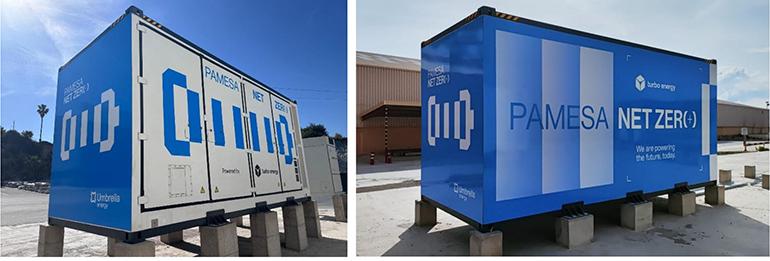
The Pamesa Net Zero project, consisting of a fully self-financed investment of €74 million, is being developed in partnership with Umbrella Global Energy. The initiative involves creating an integrated energy platform based on 80 MWp of solar photovoltaics and 366 MWh of battery storage, which will complement existing renewable capacity to reach a total power output of 100 MWp, with an estimated annual production of 113,000 MWh.
Clean energy, recycling and quarry restoration
As part of its commitment to the environment and energy efficiency, the Pamesa group is promoting a zero waste model involving the total recovery of sludge and solid waste generated by production activities, amounting to 1.4 million litres of wastewater and over 216,000 tonnes of waste annually. In addition, 7% of production incorporates recycled materials, while pallet reuse is incentivised across all plants.
Pamesa operates a solar farm with a size of more than 121,000 square metres and an installed capacity of 22.6 MWp, capable of powering over 9,000 homes and avoiding more than 5,200 tonnes of CO₂ emissions per year. This is supplemented by a heat recovery system that allows for the reuse of energy generated by the kilns, with over 76,000 MWh recovered annually and savings of more than 15,500 tonnes of CO₂ emissions. Overall, the group’s energy and environmental measures avoid over 20,700 tonnes of CO₂ emissions each year, equivalent to the absorption capacity of approximately 700,000 trees.
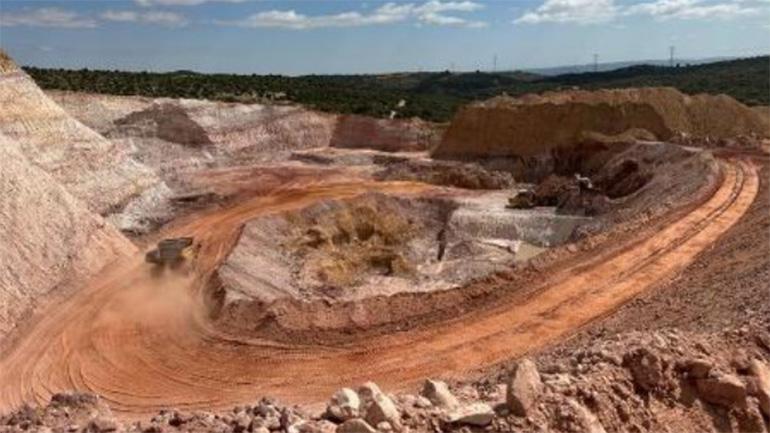
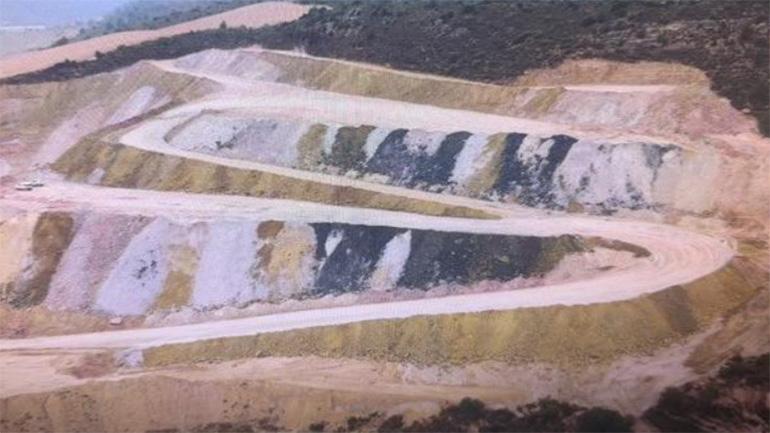
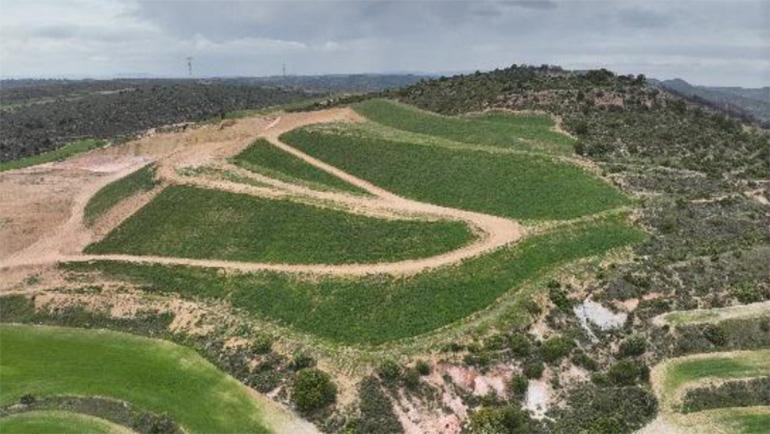
The group’s environmental commitment also extends to its quarrying operations: of the 22 hectares at the Valdecastillo quarry in Seno (Teruel), acquired in 2020, 10 hectares have already been exhausted and are currently undergoing environmental reclamation to return the land to its original agricultural use.
The cogeneration challenge
Pamesa has highlighted serious issues with cogeneration stemming from the lack of a regulatory framework to ensure plant continuity. Despite an installed capacity of 100 MW, around 30% of the machinery has reached the end of its life cycle since 2022 with no possibility of renewal, clearly impacting industrial competitiveness.
The company notes that the draft auction plan presented in 2021 was never implemented, while the proposal scheduled for 2025 introduces conditions that could penalise the sector, such as a 30% self-consumption requirement that is poorly suited to ceramic production processes.
Growth in employment
Grupo Pamesa continued to expand its workforce in 2025, identifying employment as a primary growth driver. Including the Natucer acquisition, the group’s headcount grew by 12% by year-end, reaching 3,469 employees, 97% of whom are on permanent contracts. Pamesa currently accounts for 22% of ceramic industry employment in the province of Castellón; its net pay is 38% higher than the national average and 23% above the sector average. During 2025, over €10.6 million was also distributed to staff in the form of incentives.
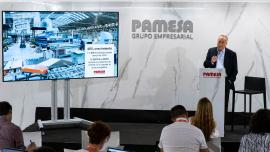
Cover photo: Fernando Roig

Did you find this article useful?
Join the CWW community to receive the most important news from the global ceramic industry every two weeks





Related articles





Read more